


A Paris Address for Discerning Collectors
At 25 bis rue Franklin, in the landmark building designed by architect Auguste Perret, Mauny became a destination for discerning collectors, interior decorators and distinguished families. Its rare wallpapers, printed using revived traditional techniques, attracted prestigious clients including the Rothschild family, the Duke and Duchess of Windsor, and American wallpaper specialist Nancy McClelland.

From Private Interiors to Exceptional Commissions
From its earliest years, Mauny’s expertise extended beyond private residences. The Maison undertook prestigious commissions in the world of transportation, including the interior decoration of the Latécoère Lieutenant de Vaisseau Paris in 1935, the presidential aircraft of Vincent Auriol in 1948, and the imperial train of Emperor Haile Selassie of Ethiopia. These ambitious projects established Mauny as a distinctive contributor to the history of decorative design.

A French Craft, Preserved
Behind its Paris address, Mauny developed its own printing workshops, first in Montfermeil and later at several locations across France. Today, production remains entirely French, with every stage carried out in a dedicated workshop where the Maison’s rare woodblock and stencil printing techniques continue to be preserved and practiced by hand.
A House Born from a Collector’s Eye
Founded in Paris in 1933 by decorator André Mauny and upholsterer-decorator and collector Robert Caillard, Mauny was born from a shared passion for the history of wallpaper and the art of decoration. At a time when industrial production was transforming the industry, they chose to revive the traditional techniques of woodblock printing, drawing on Caillard’s remarkable collection of 18th-century designs.
From its beginnings, Mauny has preserved a rare decorative heritage through craftsmanship, keeping historic techniques alive and bringing them into the present. In 1989, André Mauny was awarded the French National Prize for Arts and Crafts in recognition of his lifelong commitment to these exceptional traditions.


A Collection Between Classicism and Modernity
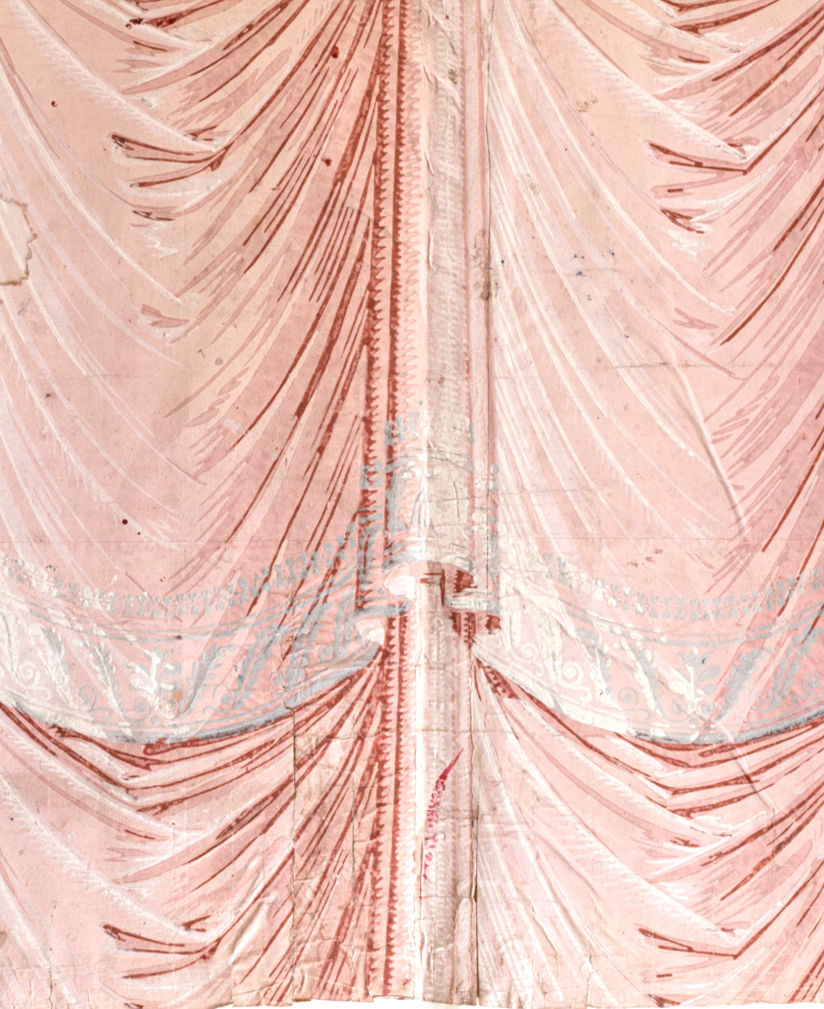
The Mauny collection was shaped by an enduring dialogue between two worlds: the decorative elegance of the 18th century and the modern spirit of Art Deco. From the outset, the Maison drew on Robert Caillard’s exceptional collection, featuring arabesques, wallpapers coordinated with Jouy printed textiles, Directoire geometric motifs, and designs originating from the royal Réveillon manufactory.

The Art Deco Legacy
In the 1970s, André Mauny acquired an exceptional collection of carved woodblocks created for the Art Deco decorator André Groult. Featuring designs by artists such as George Barbier, Jean-Émile Laboureur, Marie Laurencin and Louis Süe, this collection brought a modern interpretation of the decorative language of the 18th century. At Mauny, these two traditions meet through a shared love of refinement, ornament and precise drawing.
A Heritage Preserved and Recognised
The historical importance of the collection was officially recognised in 1994, when Mauny’s archive of antique wallpapers was listed as part of France’s Historic Monuments heritage. Today, more than one thousand designs are preserved at the Musée des Arts Décoratifs in Paris, while several hundred original drawings and models remain within the Maison’s own archives.
André Groult Collection
A Refined Vision of French Art Deco
A major figure of French decorative arts of the interwar period, André Groult gave Art Deco a refined and intimate expression. From his Paris gallery, opened in 1908, he conceived interiors as complete compositions, bringing together furniture, textiles, wallpapers and objects in carefully balanced harmony.
A passionate advocate of craftsmanship, he favoured precious materials, subtle colours and traditional techniques, including hand-printed textiles and woodblock wallpapers. Through his exhibitions and prestigious commissions, including the Normandie in 1935, he helped define a distinctly French vision of modernity.


André Groult Wallpapers: Decoration as a Total Composition
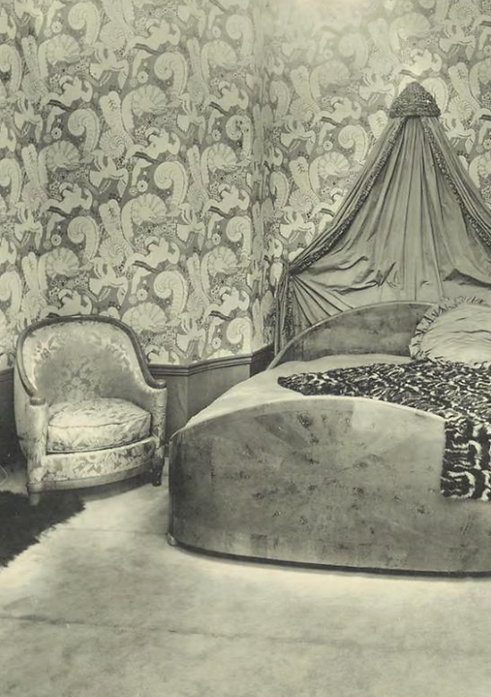
From the opening of his gallery in 1908, Groult conceived interiors as unified ensembles in which every element, including the walls, contributed to the overall composition. His wallpapers were developed around carefully considered themes, palettes and ornamental languages, then brought to life through traditional hand-printing at the Hans manufactory. Designed by Groult and artists from his circle, the patterns range from floral and exotic motifs to birds, figures and dreamlike landscapes. Rediscovered by Mauny when the Hans archives were dispersed, this exceptional collection is preserved and reissued today, allowing Groult’s distinctive decorative vision to live on.
Art Deco Wallpaper: Defining the Interior
At the beginning of the 20th century, wallpaper evolved from a simple wall covering into an essential element of interior design. As decorators began conceiving interiors as complete compositions, walls became integral to the overall harmony of furniture, textiles, lighting and rugs. Art Deco wallpapers brought colour, rhythm and atmosphere to these spaces, while Groult’s preference for traditional woodblock and stencil printing demonstrated that modern design could coexist with, and even extend, historic craftsmanship.

The Artistic Circle
Groult’s creative world extended to a remarkable circle of artists, including Jean-Émile Laboureur, Marie Laurencin, George Barbier and Miss Lloyd. Rather than imposing a uniform style, he brought together distinct artistic voices, creating a harmonious dialogue between their individual sensibilities. His commitment to recognising and crediting these collaborators gives the collection a unique historical richness, reflecting the vibrant artistic networks that shaped French decorative arts in the early 20th century.

A Distinctly French Vision of Modernity
French Art Deco was not a radical break with the past, but its reinterpretation. Drawing on the balance, ornament and harmony of the 18th century, a new generation of decorators transformed these principles into a clearer, more fluid and distinctly modern language. André Groult embodied this approach, combining classical grace with modern freedom and placing invention and craftsmanship at the heart of decoration.
The Patrimoine Collection
The Patrimoine Collection traces the evolution of French wallpaper from the 18th to the 19th century, revealing how changing tastes, techniques and ways of living transformed the decorative arts. From stylised florals, arabesques and imagined chinoiseries to neoclassical compositions, each design reflects the spirit of its time and the extraordinary richness of France’s decorative heritage.


The Golden Age of French Wallpaper
These décors evoke the golden age of French wallpaper, when Madame de Pompadour, Louis XVI and Marie-Antoinette adorned their interiors with such creations. Over the years, André Mauny enriched this heritage through extensive research, the acquisition of antique designs, and the reproduction of historic décors entrusted to him by collectors.

Wallpaper as a Decorative Art
Today, Mauny’s collection spans three centuries of decorative creation, with each design printed using traditional techniques, sometimes with the original carved woodblocks. The richness of the pigments, depth of colour and subtle variations of hand printing give each wallpaper a unique, almost painterly quality. More than a wallcovering, Mauny wallpaper embodies a French tradition in which craftsmanship, time and the art of decoration come together.

A Repertoire of Styles
The Patrimoine Collection traces the evolution of wall decoration from the 18th to the 19th century through a rich repertoire of florals, arabesques, chinoiseries and neoclassical compositions. Each design reflects the tastes and decorative language of its time, revealing the extraordinary diversity of French wallpaper.